Mural Celebrates Respect, Leadership, Connection

A person in a white shirt stands on a ladder and paints a mural.

Mural Celebrates Respect, Leadership, and Connection to Land

April 21, 2026

A pair of eagles now look over the boardroom at the Chilliwack School District office. Artist Jared Deck from Ch'iyáqtel First Nation installed the mural over spring break. Deck is a self-taught Coast Salish artist who has worked extensively on Halq’eméylem language preservation. 

“The Eagle (sp’ó:q’es) - one of the Seven Teachings - is a symbol of respect. Since this is a place where the sí:yá:ms (respected leaders) in education come together, I think this teaching - and the sp’ó:q’es - fits the space really well. For me, the eagle has always been a symbol of leadership, spirit, and a higher power,” said Deck. 

The mural includes salmon heads to symbolize resources and a way of life. Two snakes border the top of the mural representing direction and journey. Masks in the eagles’ tail flow into the water representing power in nature. 

“There is also symbolism in the colour palette. The greyish green in the birds represents the trees and the rivers,” said Deck. “The Aléxey snakes (Álhqey snake) represent the clouds and wind and bring in the blue colour of the sky, but they’re shown in an earthy red to reflect a connection to the land, dirt, and red cedar.”
Deck is a Sardis Secondary alumnus who has created pieces for Chilliwack Mural Festival, Wilma’s Transition Society, The Lhewámel Project at Peach Park, and Heritage Village. He has also created logos for district schools including Vedder Middle and Evans Elementary. 

Deck has formal training in computer graphics, and most of his artwork is usually done digitally. However, this piece was a little different. 

“I feel very fortunate and fulfilled to be able to create a hand‑painted piece at this scale. While technological tools were still part of the process, it is very much a hand‑painted piece. Normally, I would use a projector or a grid method to scale up my designs, but for this mural I used a VR headset to sketch the design directly onto the wall for the first time,” he said. “For me, it’s been really interesting to create a traditional style of art using some of the most modern technology available.” 

A small committee identified key ideas and elements from the district’s strategic plan that were important to illustrate in the project. The committee chose Deck’s submission from a group of local artists who were invited to submit designs. 

Brenda Point, acting director Indigenous education was a member of the selection committee. 

“The artists in our community are storytellers who share cultural knowledge, history, and perspectives about the world around us — Solh Temexw. Through their work, artists carry teachings forward, offering visual reminders that guide how we should be with one another: grounded in relationship, guided by respect, and attentive to all living things and all peoples,” said Point. “We give thanks to Jared Deck of Ch'íyáqtel First Nation, whose work creates a powerful visual reminder for all who enter the school district boardroom, reflecting the teaching of the sp’ó:q’es.”  


Chilliwack Secondary Students Win Regional Science Fair Awards

A group of students display their ribbons and awards in front of science banners.

Chilliwack Secondary Students Win Regional Science Fair Awards

April 20, 2026

Students from Chilliwack Secondary School (CSS) were recognized for their projects at the Fraser Valley Regional Science Fair Awards Ceremony last week. Seven CSS students received ribbons and financial awards.

“Every student who presented at the fair won either medals or monetary awards,” said CSS science teacher, Scott Liang. “This marks the first year our school has received two special awards in engineering. BC Hydro engineers were highly impressed by the students’ innovative projects.”

Each year the Fraser Valley Regional Science Fair invites students from the public, private, and home schools to present. Students can participate as a group or individually. At the regional level, students compete for thousands of dollars in cash and prizes including the chance to join Team BC and represent the Fraser Valley at the Canada-Wide Science Fair, all expenses paid. Competitors are K-12 students from Langley, Chilliwack, Abbotsford, Hope, Mission, and Maple Ridge. 

Regional Award Winners from Chilliwack Secondary School 

Asya Iwasaki 
Abbotsford-Mission Nature Club Award
Langley Environmental Partners Society Award

Miles Smith
Silver Medal
Abbotsford-Mission Nature Club Award

Brynn Anderson
Gold Medal
BC Agriculture in the Classroom Award 
UFV Dean of Science Award 

Sawyer Forstbauer and Lauren Pablo
Silver Medal
BC Hydro Power Pioneers Award

Matthew Gilleard
Gold Medal
BC Game Developers Innovation Award 

Niomi Tran 
Bronze Medal

The awards ceremony took place at University of the Fraser Valley’s Abbotsford campus on April 16th.

Learn about the culture around science fairs at Chilliwack Secondary School: https://sd33.bc.ca/news/podcast-episode-explores-chilliwack-secondarys-science-fair-culture.  
 

Podcast Episode Explores Chilliwack Secondary's Science Fair Culture

Two youth and an adult stand in front of a row of windows. They are smiling.

Podcast Episode Explores Science Fair Culture at Chilliwack Secondary 

Students present 50 projects at the school's 2026 Science Fair 

April 20, 2026 

Chilliwack Secondary School (CSS) science teachers Avril Broekhuizen and Scott Liang recently joined host Michael Unger on the podcast Let’s Innovate! The teachers spoke about the challenges and rewards of building a culture around and organizing a school science fair. 

Unger is a science communicator and the manager of community engagement for the BC Science Fair Foundation

In their interview, Broekhuizen and Liang reflected on how science courses and the science fair at CSS have evolved over the years. The school introduced a Science 9 Honours course in 2007. Since then, the science department has built a culture around scientific inquiry, hosting their own science fair each year since 2008. 

Before he became a teacher, Liang was a master’s student doing research at UBC. He immersed himself in scientific inquiry and the scientific method of learning. When he started teaching Science 10 Honours at CSS in 2020, he wanted to bring his experience at UBC into the classroom.

“A science fair is a way to foster relationships with students. It gives teachers a lot of opportunities to have genuine conversations to find out what students are passionate about,” said Liang. “Those relationships are very valuable in terms of student learning and being able to take them to the next level of thinking.”

He says the language around science experiments and inquiry is changing in a way that helps students to think more broadly about their science fair projects.  

“We are not just doing traditional experiments anymore,” said Liang. “I think the language has a very big impact on how students treat a science fair. With STEM and STEAM, we encourage students to think beyond what we’re doing in the classroom. Let’s do something engineering; let’s do something design.” 

The 2026 science fair was Chilliwack Secondary’s biggest yet with 65 students presenting 50 projects. This year, students presented a range of projects using various formats and models. 

One project examined how light pollution affects bird migratory paths through a review of published studies. Another project featured an experimental investigation into slime mold behavior and its response to different food sources. Several projects highlighted innovative thinking and real-world applications. One student designed a mobile app connected to a soil sensor that provides notifications when plants need watering. Another explored the potential of recycling plastic bottles into 3D printing filaments.

The fairs give students the opportunity to practice time management, to learn how to search for resources, to develop problem-solving skills, and to ask good questions. They are also able to earn two Independent Directed Studies (IDS) credits for their projects.

“With this year’s projects, we saw so many more projects that included learning from other subject areas. You saw kids that had their computing backgrounds and their art and design backgrounds really making their way into the projects,” said Broekhuizen. 

“I think there’s an increasing appetite for really being mentored and pursuing ideas and topics that are meaningful to individuals. As their eyes are opened to new problems and issues, they get inspired.”

Students Asya Iwasaki and Miles Smith were also interviewed. Both students received awards at the Fraser Valley Regional Science Fair.  

Listen to the episode: 
https://open.spotify.com/episode/7zCItY0h9NmyrWcvl2Kow2 
https://podcasts.apple.com/ca/podcast/chilliwack-secondary-school-science-fair/id1538873097?i=1000760762943 
https://sciencefairs.ca/lets-innovate/ 
 

Kindergarten Teachers Welcome Students and Families

Two teachers smile at the camera. On a white table in front of them a sign reads "Meet the teachers".

Kindergarten Teachers Welcome Students and Families 

Katie Julseth-White and Shauna Monkman start getting to know students and their families months before the students start school. Transition planning for September 2026 has already begun for the two Kindergarten teachers. It’s part of Stitó:s Lá:lém Totí:lt Elementary Middle School’s goal to plan successful transitions for all students. 

“As Kindergarten teachers, we believe this is probably one of the most important transitions. Our focus is building strong relationships with students and families before school begins,” said Julseth-White. 

Introducing students and families to the school and classroom routines early helps families feel welcome. Students come into the classroom with more confidence. This makes their transitions to full-time school a little easier. 

Like all elementary schools in the district, Stitó:s Lá:lém Totí:lt hosts an open house for preschoolers called Ready, Set, Explore. These events include play-based learning. Preschoolers and their families get an idea of what to expect at school. 

Families are also invited to Kinderfair for hands-on activities and a school tour. At Stitó:s Lá:lém Totí:lt’s Kinderfair, incoming students make bracelets and special bags for their classrooms. These activities help build community for incoming students. 

Julseth-White and Monkman communicate with families in a variety of ways throughout the spring. The school shares important information through emails and QR codes. Families even receive a video of the two teachers reading a story called “Our Class is a Family”. Students become familiar with the teachers and often recognize them by the time they start school. 

The school also has a social story that families can look at with their students. The social story has pictures of the school - where students line up, hang their backpacks and eat. It includes photos of staff members, too. Social stories can help reduce a child’s anxiety when they are facing a new social situation. 

A family questionnaire is available in multiple languages. It helps staff learn about students’ strengths, interests, and needs. Each family is also invited to an individual transition meeting in the classroom. There they have the opportunity for one-on-one time with their student’s teacher. 

“This meeting provides time for us to answer any questions. Sometimes it’s the family’s first child coming to school, and they have a lot of questions and wonderings. It can help settle some of the fears and anxieties around transition time,” said Monkman. “This time together reinforces families as partners in supporting student success.”

Kindergarten is gradual entry. This lets students slowly become comfortable with routines, their classroom, and expectations. 

“The plan we have in place helps new learners feel welcome, connected, and excited to have that lifelong learning journey,” said Julseth-White. “We’re happy to be the start of that.”

Learn more about kindergarten: Kindergarten | Early Learning

Summer Learning Program Continues to Grow

Children gather together and are looking out over a pond. It's sunny. Most are wearing hats.

Summer Learning Program Continues to Grow in Chilliwack 

Registration is open for the Chilliwack School District’s summer learning program. Students can explore everything from outdoor adventure and coding to photography and full credit secondary courses. 

Over 1200 students participated in the program in 2025. It was the first year that a student from every school in the district was enrolled. The district also sees enrolment from independent school students and students from other parts of the province.     

“For two weeks, we have 1200 students in Grades 1-12 navigating six or seven different sites,” said Sean Wicker, District Principal of Curriculum, Careers, and Alternative Education. “Families love it and the kids love it. The teachers who work at summer school love it; many will come back year after year.” 

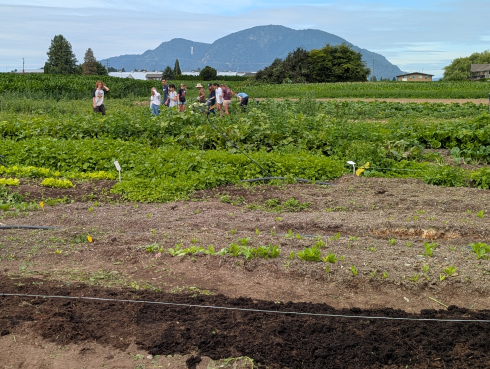
This summer, sites include Little Mountain Elementary, Chilliwack Middle, Chilliwack Secondary, Sardis Secondary Farm, Sqwá First Nation, and Tzeachten Sports Field. 

Elementary and middle school students participate in two-week long summer camp style courses. These combine learning with physical education and fun. For the youngest learners, this includes courses like 3 Rs on the Move, Math on the Move, and Get Fit with Lit. Elementary students focus on developing literacy and numeracy skills with movement and fitness breaks to keep them engaged. 

“The middle school courses focus heavily on applied skills and design technology and fine arts like band and musical theatre,” said Wicker. “Last year, students performed in a band concert and gave a musical theatre performance, which the elementary students were able to watch.” 

The summer learning program also offers courses specific to our local Indigenous communities with classes running at Sqwá First Nation, and Tzeachten Sports Field.  

Secondary students can take full-credit courses to earn credits towards graduation, retake courses to improve their marks, or complete prerequisites for post-secondary. Students must be dedicated because the four-week courses are intensive and move at a fast pace. 

There are also repair courses offered for students who did not receive a passing grade and are looking to pass the course before the new school year begins. 

The summer learning program is inclusive for children with Individual Education Plans (IEPs) or those who receive support from an Education Assistant in class. There are also classes to support learning English as an additional language. 

“We have a learning assistance resource teacher who supports with Individualized Education Plans,” said Wicker. “We also have a counsellor on staff for the summer. There is a lot of preparation and careful planning.” 

The summer learning program is open to any student and courses are free to attend for residents of BC. Students and families are encouraged to apply early as courses are in high demand and do fill up. 

More Information
To review the catalogue or register for the summer learning program visit: https://sd33.bc.ca/summer-learning-2026. 

To learn more about courses, supports, and special requests contact Michelle Reilly at zvpuryyr_ervyyl@fq33.op.pnac.cb.33ds@yllier_ellehcim .

For questions about the registration process, documentation, fees or to make a change to your child’s registration, contact Joan Simpson at wbna_fvzcfba@fq33.op.pnac.cb.33ds@nospmis_naoj
 

Students Earn Medals at Regional Skills Competition

A student wearing a mechanic's suit smiles at the camera. On the surface in front of them are jumper cables and wires.

Chilliwack Students Earn Medals at Regional Skills Competition

Students in the Chilliwack School District are exploring careers in the skilled trades and technology sector. Most recently, secondary students competed against other students in the Upper Fraser Valley at the Regional Skills Competition. 

In February, 22 students from the district participated in the competition at the University of the Fraser Valley’s Chilliwack Trades & Technology Campus. They competed in Architectural CAD, Automotive Service, Construction Electrical, Mechanical CAD, and Welding. 

Chilliwack School District Results

Automotive service 1 - Zachary Dickey - Gold medal

Automotive service - Josh Dekker - Bronze medal

Drafting - Mechanical - Paolo Chirico - Gold medal 

Drafting - Mechanical - Alex Hooker - Silver medal 

Drafting - Architectural - Muhammed Hassan- Silver medal 

Drafting - Architectural - Bree Sawer - Bronze medal

Welding - Kody Harbarenko - Bronze medal

Students who received Gold in their discipline are eligible to participate in the provincial competitions in Abbotsford on April 15th, 2026.  

“Skilled trades are critical to British Columbia because they power the province's economy, infrastructure, and essential services," said Heather Elliott, Acting Vice Principal of Career Education. “With over 100,000 job openings expected in the next decade, competitions like these raise the profile of skilled trades in our province and get students engaged and excited about entering the field.” 

The Career Education department offers opportunities for secondary students to take pre-apprenticeship training that provides them with dual credit for secondary school courses and apprenticeship or industry training programs. Students may also apply for on-the-job training as a youth apprentice. 

Learn more about trades opportunities in the Chilliwack School District: https://careereducation.sd33.bc.ca/.

Learn more about Skills Canada BC: https://skillscanada.bc.ca/


National Poetry Month in Canada

A green and pale yellow book with the title National Poetry Month.

National Poetry Month: 10 Recommendations from Teacher-Librarians!

It's National Poetry Month and we're recognizing the occasion with poetry recommendations from our Teacher-Librarians. These ten recommendations include novels in verse and more traditional poetry books. Novels in verse are a great way to introduce students in the middle grades to poetry. 

Odder by Katherine Applegate

Told in verse and inspired by real events, this story follows a playful sea otter who is rescued, released, and later returned to an aquarium after a shark attack. Unable to go back to the wild, Odder discovers a new purpose helping orphaned pups learn to survive. 

Spark by Chris Baron

The story centers around a town trying to rebuild and move forward after devastating fires destroy everything. Finn and his friend, Rabbit, care deeply about their environment and their cameras capture the “spark” that started the fire. An absolutely amazing story for helping kids understand wildfires and our human impact on the natural world.

Love That Dog by Sharon Creech

Jack hates poetry. He thinks that only girls write it and every time he tries to, his brain feels empty. But his teacher, Miss Stretchberry, won't stop giving her class poetry assignments—and Jack can't avoid them. But then something amazing happens. The more he writes, the more he learns that he does have something to say.

And Then, Boom! By Lisa Fipps

This story follows Joe, a boy whose life suddenly unravels when his family faces financial hardship, forcing him to navigate housing insecurity, hunger, and uncertainty. As everything familiar disappears, Joe has to find strength and hope in the midst of it all.

Alone by Megan E. Freeman

When twelve-year-old Maddie hatches a scheme for a secret sleepover with her two best friends, she ends up waking up to a nightmare. She’s alone - left behind in a town that has been mysteriously evacuated and abandoned. With no one to rely on, no power, and no working phone lines or internet access, Maddie slowly learns to survive on her own. Her only companions are a Rottweiler named George and all the books she can read. After a rough start, Maddie learns to trust her own ingenuity and invents clever ways to survive in a place that has been deserted and forgotten. 

The Trouble with Heroes by Kate Messner

Finn’s father died during 9/11 while trying to save others, and Finn is left angry at the world. After a series of vandalizing incidents, he is tasked to climb all forty-six Adirondack High Peaks over the summer, alone except for his dog.

A Poem for Every Question by Brian Bilston

This is a hilarious non-fiction collection of 100 poems – each one answering a curious question with subjects ranging from science and animals to unicorns, pyramids, technology! 

Dear Acorn by Joyce Sidman

This is a spectacular poetry book made up of back-and-forth letter poems between an Oak tree and an Acorn; between a Brick and a School. There are 6 other sets of back-and-forth poems.

Rap It Up! by Carole Boston Weatherford

From scribbling words on the page to spitting rhymes on the mic, a joyful narrator guides readers through the emotions, literary techniques, structures and motifs that help make rap so amazing.

Poems For Every Season by Bette Westera

Each season opens with a haiku, following with the season’s months and their poems. Readers will dance into March with a rondel for a newborn lamb, wave in the August wind with a five-line tanka for a summer sunflower, snuggle in for December with a limerick for all those who stayed home instead of going south...

Do you have questions about these recommendations? Ask a Teacher-Librarian!  

Established in Canada in 1998 by the League of Canadian Poets, National Poetry Month takes place every April and brings together schools, publishers, booksellers, literary organizations, libraries, communities and poets from across the country to celebrate poetry and its vital place in Canada's culture.

Learn about National Poetry Month: https://poets.ca/

Find poetry resources for educators: https://poets.ca/offerings/resources/#educators

Outside Play and Physical Activity

A girl with long curly brown hair balances on a log. She is in a park with leafy green trees in the background.

Outside play and physical activity for children and youth

Get outside and play 

Physical activity is a necessary requirement for optimal health. Regular physical activity in childhood and adolescence helps to develop cardiovascular fitness and muscle strength, supports positive social connections and improves mental well-being.  

There are many benefits to unstructured play. These benefits are even greater when engaging in physical activity outdoors. When children and youth spend time outside, they: 

Sit less, move more and play longer – key to cardiovascular health and fitness. 

Have healthier eyes – spending more time outside reduces nearsightedness risks. 

Sleep better – sunlight helps regulate sleep hormones and sleep patterns. 

Enjoy improved mood – physical activity can reduce symptoms of anxiety and depression.

Feel more connected to nature – appreciation of the environment and being in nature can support healthy and balanced emotions.

Planning active outings doesn’t have to be challenging or costly. Here are some fun ideas you can try: 

Try a new activity – check out geocachingseaweed searching or attend a local explorer day with NatureKidsBC

Unplug and connect – ideas to decrease recreational screen time

Go for a scavenger hunt – try this nature scavenger hunt

Go for a walk or hike – try these 10 hikes to take your kids on this summer

Play in a forest or park – try a new regional park every day for a week.  

Explore a local stream – check these beautiful watershed walks in the region. Learn about water safety for children

Swim at the pool, waterpark or beach – check beach safety conditions first or stay cool at a local spray park. 

Ride a bike or scooter – explore the Hope Bike Park or check out these rides along Boundary BayPitt Meadows or Vedder Greenway. Learn more about cycling safety on Fraser Health’s website

Visit farms, fish hatcheries and bird sanctuaries – try this local family fun guide for unique ideas.  

Find more ideas to keep your kids active through the year on Fraser Health’s Keeping children active page.

International Day for the Elimination of Racial Discrimination

An image that reads International Day for the Elimination of Racial Discrimination.

District Recognizes International Day for the Elimination of Racial Discrimination

On March 21, the Chilliwack School District will recognize the International Day for the Elimination of Racial Discrimination. This day recognizes that injustices and prejudices fueled by racial discrimination take place every day.

The Chilliwack School District is committed to creating safe, caring, and inclusive schools for all students and staff. Every student deserves an education free of discrimination where they can focus on learning and thriving.

Last school year, the district introduced an Anti-Racism Action Plan with commitments for staff training, community partnerships, policy reviews, and school-based programs. The plan is meant to help students learn in environments that are equitable, inclusive, and free from racism and systemic barriers. The work continues in 2025-26.

A newly drafted Anti-Racism Administrative Procedure (AP) will reinforce respect for diversity and prohibits discrimination on protected grounds while providing clear guidance for school leaders to respond to racist incidents in a consistent and impactful way. This AP supports our Inclusion Policy and commitment to removing barriers and fostering belonging for all learners.

A foundation learning piece is the provincial “Learning to Be Anti-Racist: An Introductory Course.” This online course is available to all district employees. It includes seven modules that introduce concepts such as systemic racism, intersectionality, and strategies for responding to incidents of racial harm in schools. It is designed to build shared understanding so that staff feel more confident recognizing and addressing racism.

Along with professional learning, the district continues to strengthen practices that support respectful school communities — including restorative approaches to addressing harm, the collaborative work being done by the IDEA Committee, ongoing staff learning opportunities, and alignment with provincial guidance on responding to racist incidents in schools.

How you can fight racism, discrimination, and xenophobia in Canada

1. Educate yourself and others about the history and ongoing issues of racism, discrimination, and xenophobia in Canada to increase awareness and understanding of these issues. Check out this podcast to learn how cognitive biases can perpetuate systemic racism: Eh Sayers Season 2, Episode 1 - Created Equal.

2. Speak out against racism, discrimination, and xenophobia when you encounter it. This can be done by calling out racist or discriminatory behavior and language, and by standing in solidarity with those who are being targeted.

3. Support Indigenous peoples and racialized and religious minority communities by listening to and amplifying their voices, and by supporting organizations and initiatives that work towards racial equality.

4. Encourage anti-racism and racial equality, in all areas of life, including in the workplace, schools, and communities, and promote policies and initiatives that support these values.

Learn More
Anti-Racism in Chilliwack Schools: Anti-Racism | inclusiveschools.sd33.bc.ca

From Pro D to Daily Practice: Literacy Strategies for Middle Schools

A group of adults gather in a room. There is a colourful image on a large screen in front of them.

From Professional Development to Daily Practice: Literacy Strategies for Middle Schools

An important part of sustaining strong student literacy is continuing to build on the expertise and confidence teachers already bring to the classroom. In the fall, the Chilliwack School District hosted two days of professional development for 70 middle school teachers. The middle school literacy retreat was designed to align the work that’s happening in Chilliwack schools with the District’s Literacy Framework.  

Literacy is priority in the Chilliwack School District’s strategic plan. It is a foundation for learning. With strong literacy, students can access knowledge, express ideas, think critically, and communicate.  

At the fall retreat, the curriculum team led two days focused on literacy practices that support reading, evidence-based instruction, collaboration, and Indigenous perspectives and world views.  

“When we’re able to bring 70 teachers together to hear the same message, that’s powerful. Teachers were engaged and excited,” said Assistant Superintendent Dr. Kirk Savage. “They went away with the confidence to use new strategies. It was the kind of lesson you could learn today and try tomorrow.”  

One strategy shared at the retreat was about front-loading difficult words in non-fiction. When a student explores a challenging word before reading it in a piece of non-fiction, understanding becomes easier.  

Take the word, decomposition. Breaking the word into its smaller parts – de (down, away, or undoing), compose (to put together or make up), and tion (the act of) - helps students make meaning. It literally means “the act of coming apart”.  

Students can use what they learn about word parts to make predictions about a text they’re about to read. They can also use the word in their own writing. By the time they read the word in a piece of non-fiction, it’s less likely to be a barrier. This can be especially helpful for non-fiction, which often includes challenging and specialized words.  

A Grade 6 teacher shared their reflections with the presenters: “This was a fantastic Pro D - the best I have had in literal years. I have stuff I can do in class immediately, fantastic resources for long term, and it was delivered by talented and super kind folk.”  

Since the retreat, teachers from all six middle schools have continued to work with the curriculum department to engage in further learning. They are using what they learned in their schools.  

“Teachers from Vedder Middle School who attended the retreat are now collaborating to integrate the literacy strategies with colleagues in science and social studies. The team continues to meet regularly to share strategies, reflect on implementation, and celebrate successful practices,” said Shawna Petersen, District Principal for Assessment and Instruction.  

“This is timely work because our achievement at middle school has not reflected the same success that we’ve had at elementary. When comparing our literacy assessment data to the rest of B.C., we see encouraging results. Grade 4 results in Chilliwack exceed provincial averages. However, at Grade 7, we dip below the provincial average.  This tells us we're providing a strong foundation in early literacy and need to grow our practices into the middle years," said Dr. Savage.  

To that end, the curriculum team is focusing support on middle schools this school year. The District will continue to monitor results and anticipates that the work done now will help close the gap for future students.